
Cancer Incidence Is Rising Rapidly in South Africa:
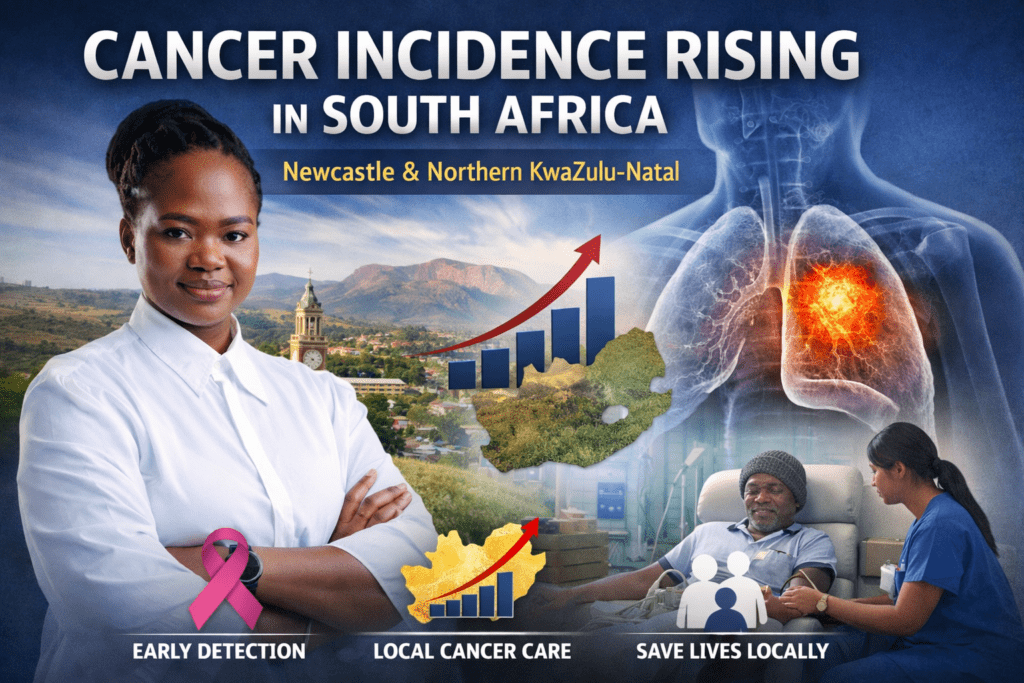
Cancer Incidence Is Rising Rapidly in South Africa: What Patients in Newcastle and Northern KwaZulu- Natal Need to Know
As an oncologist serving communities across northern KwaZulu-Natal, I am seeing a clear and concerningtrend: more South Africans are being diagnosed with cancer, and many are presenting at later stages.
This rise is not confined to major cities—it is increasingly affecting towns and rural areas such as Newcastle, Osizweni, Dundee, Glencoe, Greytown, Nongoma, Paulpietersburg, Pongola, Ladysmith,Ulundi, and Vryheid. This article explains why cancer incidence is rising, which cancers are most common, what early warning signs to watch for, and how timely access to an oncologist near you can make a life-saving difference.
Why Cancer Rates Are Increasing in South Africa
Why Cancer Rates Are Increasing in South Africa
Cancer is no longer a rare disease. Several factors are driving the rising numbers:
- Longer Life Expectancy
As people live longer, the risk of developing cancer increases. Age remains one of the strongest risk factors.
- Lifestyle Changes
Higher rates of smoking, alcohol use, obesity, poor diet, and physical inactivity are linked to cancers such as breast, colorectal, liver, and oesophageal cancer.
- Infections and Chronic Conditions
South Africa carries a high burden of HIV, HPV, hepatitis B and C, which significantly increase cancer risk when not managed optimally.
- Environmental and Occupational Exposures
Communities near industrial areas, mining regions, or exposed to biomass fuels may face higher long-term cancer risks.
- Improved Detection (But Still Too Late for Many)
While screening and awareness have improved, many patients still seek care only once symptoms are advanced—particularly in rural and semi-urban areas.
The Most Common Cancers We See in Northern KwaZulu-Natal
In my clinical practice, the most frequently diagnosed cancers include:
- Breast cancer
- Cervical cancer
- Prostate cancer
- Colorectal cancer
- Lung cancer
- Oesophageal cancer
- Haematological cancers (lymphoma and leukaemia)
These cancers are highly treatable when detected early, underscoring the importance of local access to specialised oncology care.
Why Early Diagnosis Saves Lives
Early-stage cancer is often:
- Easier to treat
- Less aggressive
- Less costly to manage
- Associated with better long-term survival
Unfortunately, many patients in surrounding areas delay seeing an oncologist because of distance, fear, or lack of information. This delay can turn a curable cancer into a life-threatening condition.
Warning Signs You Should Never Ignore
Seek urgent medical assessment if you experience:
- A new lump or swelling
- Unexplained weight loss
- Persistent pain or fatigue
- Abnormal bleeding
- Changes in bowel or bladder habits
- Chronic cough or difficulty swallowing
- Non-healing sores
If these symptoms persist for more than two weeks, consult an oncologist near you in and around Newcastle as soon as possible
Access to Oncology Care in Newcastle and Surrounding Areas
At Melna Oncology Centre, our mission is to bring specialist cancer care closer to home. Patients should not have to travel long distances to receive timely, high-quality oncology services.
We proudly serve patients from:
- Newcastle and Osizweni
- Dundee and Glencoe
- Greytown and Nongoma
- Paulpietersburg and Pongola
- Ladysmith, Ulundi, and Vryheid
This regional approach improves outcomes by enabling:
- Earlier diagnosis
- Faster initiation of treatment
- Better follow-up and continuity of care
The Role of an Oncologist in Your Cancer Journey
An oncologist:
- Confirms the diagnosis
- Stages the cancer accurately
- Designs a personalised treatment plan
- Coordinates chemotherapy, immunotherapy, hormonal therapy, or targeted treatment
- Works closely with surgeons, radiologists, and palliative care teams
- Supports patients and families emotionally and medically
Choosing an experienced oncologist in Newcastle ensures decisions are made with precision, compassion, and evidence-based expertise.
Prevention and Screening: What You Can Do Today
While not all cancers are preventable, risk can be reduced through:
- Regular screening (Pap smears, mammograms, PSA testing, colon screening)
- Smoking cessation
- Maintaining a healthy weight
- Managing chronic infections
- Attending follow-up appointments promptly
Early action saves lives—screening is not optional, it is essential.

When to See an Oncologist Near You
You should consult an oncologist if:
- You have a confirmed or suspected cancer diagnosis
- Screening results are abnormal
- Symptoms persist despite treatment
- You need a second opinion
- You require ongoing cancer management or surveillance
Timely referral can dramatically change outcomes.
Final Thoughts from Your Oncologist
Cancer incidence is rising, but so is our ability to treat it effectively—when patients present early and receive expert care. Access to trusted, local oncology services is no longer a luxury; it is a necessity for communities across northern KwaZulu-Natal.
If you or a loved one are concerned, do not wait. Early consultation with an oncologist near you could save your life.
