Breast cancer is one of the most commonly diagnosed cancers among women, although it can also affect men. Early diagnosis and timely access to appropriate treatment can significantly improve outcomes.
At Melna Oncology Centre, Dr Thandeka Buthelezi-Zulu provides personalised oncology care to patients from Newcastle, Vryheid, Dundee, Utrecht, Volksrust and surrounding communities. This includes specialist assessment, systemic cancer therapy where appropriate, treatment monitoring and coordination with the other healthcare professionals involved in each patient’s care.
Understanding Breast Cancer
Breast cancer develops when abnormal cells in the breast begin growing uncontrollably. These cells may remain confined to their original location or invade surrounding breast tissue. In some cases, cancer cells can spread to nearby lymph nodes or other parts of the body.
Breast cancer is not a single disease. Its behaviour and treatment depend on the type of tumour, its stage and the biological features of the cancer cells.
Common forms and subtypes include:
Ductal Carcinoma In Situ
Ductal carcinoma in situ, commonly called DCIS, involves abnormal cells contained within the milk ducts. It is considered non-invasive because the cells have not spread into surrounding breast tissue.
Invasive Ductal Carcinoma
This common form of breast cancer begins in a milk duct and then grows into the surrounding breast tissue. It may also spread to lymph nodes or other organs.
Invasive Lobular Carcinoma
Invasive lobular carcinoma begins in the milk-producing glands, known as lobules, and spreads into nearby breast tissue.
Hormone Receptor-Positive Breast Cancer
Some breast cancers have receptors for the hormones oestrogen, progesterone or both. These tumours may respond to medicines that block hormones or reduce their effects on cancer cells.
HER2-Positive Breast Cancer
HER2-positive breast cancer produces an increased amount of the HER2 protein, which can encourage cancer growth. Treatments that specifically target HER2 have significantly improved care for many patients with this subtype.
Triple-Negative Breast Cancer
Triple-negative breast cancer does not have oestrogen receptors, progesterone receptors or increased HER2. It often grows more quickly than some other breast cancers and requires a different treatment approach.
Possible Signs and Symptoms
Early breast cancer may not cause noticeable symptoms, which is why appropriate screening and awareness of normal breast appearance are important.
Possible signs include:
- A new lump or thickened area in the breast or underarm
- A change in the size, shape or appearance of the breast
- Dimpling, puckering, redness or thickening of the skin
- A nipple that becomes newly inverted
- Changes affecting the nipple or surrounding skin
- Unusual nipple discharge, particularly bloody discharge
- Persistent discomfort in one specific area
- Swelling in the breast, chest or underarm
Most breast lumps are not cancerous. However, any new or unusual breast change should be assessed by a healthcare professional, even when it is not painful.
Men should also seek medical attention if they notice a breast lump, nipple discharge or changes affecting the nipple or chest area.
How Is Breast Cancer Diagnosed?
An abnormal symptom or screening result does not automatically mean that cancer is present. Further examination and testing are required to establish the cause.
Diagnosis may include:
Clinical Examination
A healthcare professional examines the breasts and surrounding lymph-node areas and asks about symptoms, medical history and any family history of breast or related cancers.
Breast Imaging
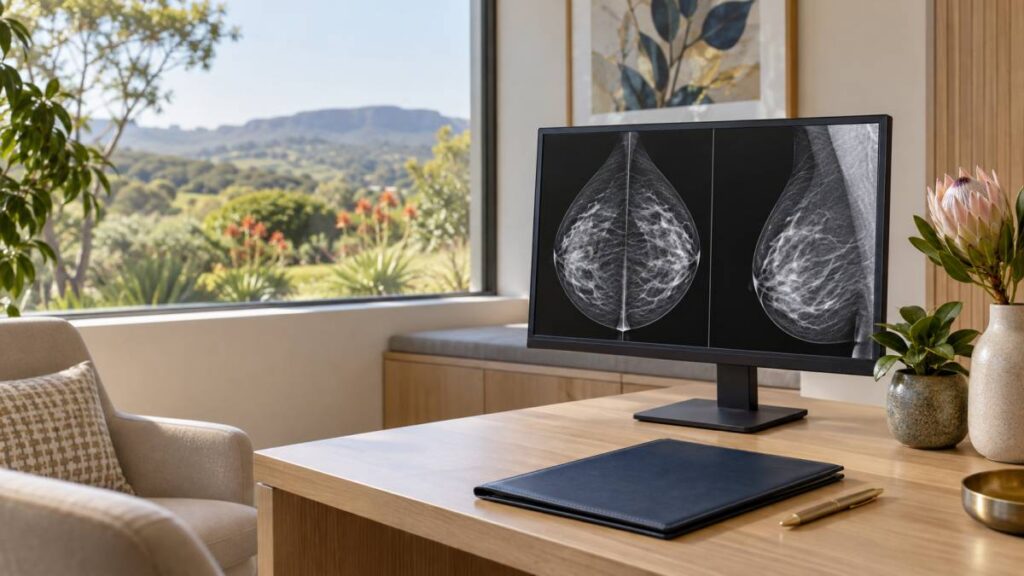
A mammogram uses specialised X-rays to identify suspicious breast changes. Ultrasound may help determine whether an abnormality is solid or fluid-filled, while MRI may be recommended in selected circumstances.
Biopsy
A biopsy removes a small sample of breast tissue for examination by a pathologist. This is the definitive way to determine whether an abnormality is cancerous.
If cancer is confirmed, the tissue is assessed to establish the cancer type and grade. Biomarker testing usually examines oestrogen receptors, progesterone receptors and HER2. These results help guide treatment.
Staging Investigations
Additional investigations, such as CT, bone or other scans, may be recommended when clinically appropriate. Not every patient requires every type of staging scan.
The purpose of staging is to determine the extent of the cancer and whether it has spread beyond the breast and nearby lymph nodes.
Personalised Breast Cancer Treatment
Treatment is based on several factors, including:
- The type and stage of the cancer
- Tumour size and lymph-node involvement
- Hormone receptor and HER2 results
- Other biological characteristics of the tumour
- Whether the cancer has spread
- The patient’s general health and personal circumstances
Breast cancer care is usually multidisciplinary and may involve an oncologist, breast surgeon, radiation oncologist, radiologist, pathologist and other healthcare professionals.
A treatment plan may include one or more of the following:
Surgery
Breast-conserving surgery, sometimes called a lumpectomy, removes the tumour and a margin of surrounding tissue while preserving as much of the breast as possible.
A mastectomy removes the breast and may be recommended depending on the extent of the cancer, the patient’s individual circumstances and personal preference.
Lymph nodes may also be assessed during surgery. The type of lymph-node procedure required depends on the individual diagnosis.
Radiotherapy
Radiotherapy uses carefully targeted high-energy radiation to destroy cancer cells and reduce the risk of recurrence. It is commonly used after breast-conserving surgery and may also be recommended following mastectomy in certain circumstances.
Chemotherapy
Chemotherapy uses medicines that travel through the bloodstream to destroy cancer cells.
It may be given before surgery to shrink a tumour, known as neoadjuvant treatment, or after surgery to reduce the risk of recurrence, known as adjuvant treatment. It may also be used to control breast cancer that has spread to other parts of the body.
Endocrine or Hormonal Therapy
Hormonal therapy is used for cancers that have oestrogen or progesterone receptors. These medicines reduce hormone stimulation of the cancer cells and may be taken for several years.
Targeted Therapy
Targeted treatments act on particular biological features of cancer cells. For example, HER2-targeted medicines may be used to treat HER2-positive breast cancer.
Other targeted treatments may be considered according to the tumour’s molecular characteristics and stage.
Immunotherapy
Immunotherapy helps the immune system recognise and attack cancer cells. It may be appropriate for selected patients with triple-negative or advanced breast cancer, depending on the tumour’s biomarkers and other clinical factors.
It is not suitable for every breast cancer diagnosis.
Support Throughout Treatment
Breast cancer treatment affects more than the tumour itself. Patients may require help managing side effects, emotional distress, changes in body image, fatigue, nutrition and daily activities.
Supportive care may include:
- Symptom and pain management
- Nutritional guidance
- Physiotherapy and rehabilitation
- Psychological and emotional support
- Management of treatment-related side effects
- Palliative care when appropriate
- Ongoing follow-up and survivorship care
Patients with a strong family history, a diagnosis at a younger age or certain breast cancer subtypes may also be referred for genetic counselling and testing.
Breast Cancer Care at Melna Oncology Centre
Dr Thandeka Buthelezi-Zulu works with each patient to explain their diagnosis and develop a treatment plan based on the specific characteristics of their cancer.
Melna Oncology Centre provides specialist oncology assessment, systemic cancer treatment where appropriate and ongoing monitoring. Care is coordinated with surgeons, radiation oncologists, imaging specialists, pathologists and other healthcare professionals when additional services are required.
If you have been diagnosed with breast cancer, require an oncology opinion or need guidance regarding treatment, contact Melna Oncology Centre in Newcastle to request a consultation.
This article provides general educational information and does not replace an individual medical assessment, appropriate screening or personalised treatment advice.
Sources and further reading:World Health Organization – Breast Cancer, South African National Department of Health – Breast Cancer Prevention and Control Policy, and National Cancer Institute – Breast Cancer.
This article offers general information. It cannot replace advice based on your own health and circumstances. Please discuss symptoms, test results and treatment decisions with a qualified healthcare professional.
We're here to help
Speak with our team
If you would like to discuss an appointment, contact Melna Oncology Centre in Newcastle.