To treat or control cancer
For some cancers, radiotherapy may be used with the aim of eliminating the cancer or achieving long-term control.

Treatment & care / Melna Oncology Centre
Precise treatment. Individually planned.
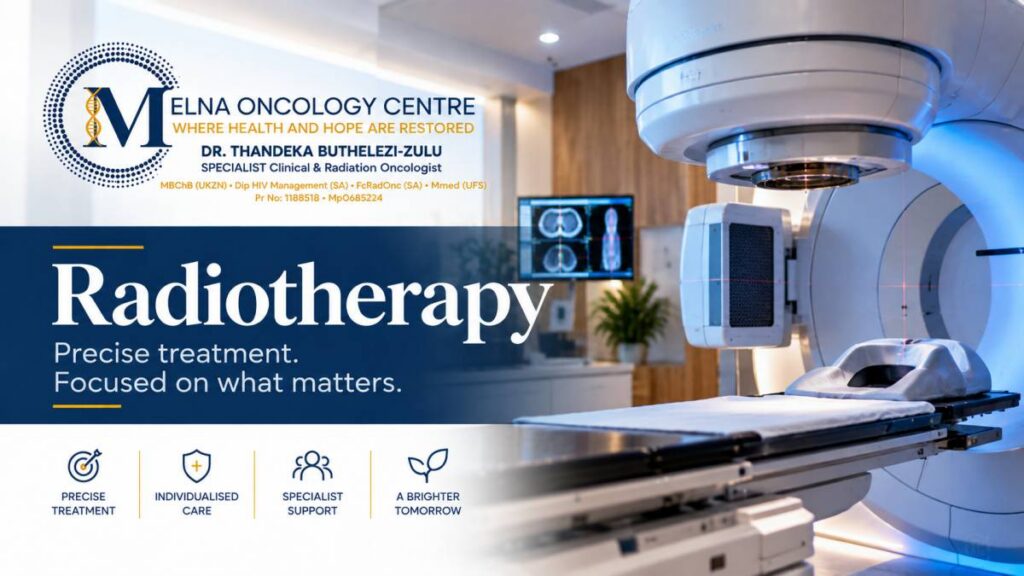
Radiotherapy, also known as radiation therapy, uses carefully planned high-energy radiation to treat cancer.
It can be used as the main treatment for certain cancers, before or after other treatments such as surgery, or together with systemic treatments. Radiotherapy may also be used in some circumstances to relieve symptoms caused by cancer.
At Melna Oncology Centre, Dr Thandeka Buthelezi-Zulu, Specialist Clinical & Radiation Oncologist, assesses each patient’s diagnosis and individual circumstances when considering whether radiotherapy may form part of their treatment.
Radiotherapy works by damaging the DNA of cells within the area being treated.
Cancer cells are generally less able than normal cells to repair this damage, which can prevent them from continuing to grow and divide.
Radiotherapy treatment is carefully planned to deliver an appropriate dose of radiation to the area requiring treatment while limiting the dose received by surrounding healthy tissues as far as reasonably possible.
The treatment plan is individual to each patient.
Radiotherapy can have different purposes depending on the cancer and the individual patient’s circumstances.
For some cancers, radiotherapy may be used with the aim of eliminating the cancer or achieving long-term control.
Radiotherapy may sometimes be given before an operation to reduce the size of a tumour or improve the effectiveness of subsequent treatment.
Radiotherapy may be recommended after surgery to treat cancer cells that may remain in the area and reduce the risk of the cancer returning locally.
Radiotherapy can sometimes be combined with chemotherapy or other systemic treatments as part of a coordinated treatment plan.
Radiotherapy can also be used to relieve symptoms caused by cancer, such as pain, bleeding or pressure on surrounding tissues.
This is often referred to as palliative radiotherapy.
There are different ways of delivering radiotherapy.
External beam radiotherapy delivers radiation from a machine outside the body.
The machine directs radiation towards the area being treated according to an individually developed treatment plan.
Treatment itself usually takes only part of the overall appointment. Time is also required to position you accurately before the radiation is delivered.
Internal radiotherapy, or brachytherapy, involves positioning a radioactive source inside or close to the area requiring treatment.
Brachytherapy is used for particular cancers and clinical situations.
Not every radiotherapy patient requires brachytherapy, and the appropriate form of radiotherapy depends on the diagnosis and treatment plan.
Careful planning is an important part of radiotherapy.
Before treatment begins, imaging is typically used to identify the area requiring treatment and the surrounding structures that should be protected as far as possible.
This planning process allows the radiation dose, treatment area and direction of treatment to be calculated.
Depending on the part of the body being treated, special positioning equipment may be used to help you remain in the same position during each treatment session.
Small temporary or permanent reference marks may sometimes be required to assist with accurate positioning.
Your radiotherapy team will explain what is required for your particular treatment.
You will be carefully positioned for treatment according to your treatment plan.
For external beam radiotherapy, the treatment machine may move around you to deliver radiation from different directions.
You will usually be alone in the treatment room while the radiation is being delivered, but the radiotherapy team can monitor you throughout the treatment.
It is important to remain as still as possible while treatment is taking place.
The radiation delivery itself is generally brief, although the complete appointment takes longer because accurate positioning and preparation are required.
You cannot normally feel the radiation while external beam radiotherapy is being delivered.
The treatment itself should not feel hot, burn or cause an electrical sensation.
However, side effects can develop gradually during a course of treatment because normal tissues within or close to the treatment area may also be affected.
Tell your healthcare team about symptoms or discomfort you experience during treatment so that they can be assessed and managed appropriately.
Patients receiving external beam radiotherapy do not become radioactive as a result of their treatment.
The radiation is delivered by the treatment machine and does not remain inside the body afterwards.
You can normally be around family members and other people after an external beam radiotherapy session.
Some forms of internal radiotherapy involve radioactive material being placed temporarily or permanently inside the body. In these circumstances, specific precautions may sometimes be required.
Your treatment team will give you clear instructions if this applies to you.
The number of treatment sessions varies considerably.
Some radiotherapy treatments may be delivered in a single session, while others are given over several days or weeks.
Each treatment session is sometimes called a fraction.
The number of fractions and the radiation dose depend on factors including:
Dr Buthelezi-Zulu will discuss the proposed treatment schedule with you.
Side effects depend strongly on which part of the body is being treated, the radiation dose, the number of treatments and individual patient factors.
This means two people receiving radiotherapy can have very different experiences.
Possible general effects may include:
Other side effects are specific to the area being treated.
For example, treatment involving the head and neck, chest, abdomen or pelvis can each produce different effects because different organs and tissues are exposed.
Your oncology team will explain the side effects particularly relevant to your treatment area and treatment plan before radiotherapy begins.
Skin within the treatment area can sometimes become sensitive, dry, itchy or irritated as treatment progresses.
Your radiotherapy team will advise you on appropriate skin care.
Avoid applying unapproved creams, lotions, medicines or home remedies to the treatment area without discussing them with your healthcare team first.
If your skin becomes uncomfortable or you notice significant changes, let your treatment team know.
Tiredness is a common side effect of radiotherapy, particularly during longer courses of treatment.
Fatigue may develop gradually and can sometimes continue for a period after treatment has finished.
Try to balance activity with adequate rest and tell your healthcare team if fatigue is significantly affecting your daily life.
Some patients continue working throughout radiotherapy, while others reduce their hours or take time away from work.
This depends on the area being treated, your treatment schedule, possible side effects, the nature of your work and how you feel during treatment.
Discuss your circumstances with your healthcare team if you are uncertain about what may be realistic during your course of radiotherapy.
The effects of radiotherapy do not necessarily stop immediately when the final treatment session is completed.
Cancer cells may continue responding to radiation after treatment has finished, and some treatment-related side effects can temporarily continue or become more noticeable before improving.
Follow-up allows your oncology team to assess your recovery, manage ongoing side effects and monitor your condition.
The timing and type of follow-up will depend on your diagnosis and treatment plan.
Radiotherapy is much more than simply directing radiation at a tumour.
It requires careful assessment, imaging, treatment planning, accurate positioning, appropriate dose calculation and monitoring throughout treatment.
Dr Buthelezi-Zulu’s role as a Specialist Clinical & Radiation Oncologist is to assess how radiotherapy may fit into the patient’s overall cancer treatment and guide the patient through that process.
Patients are encouraged to ask questions and understand why radiotherapy is being recommended, what treatment will involve and what they may experience along the way.
If radiotherapy has been recommended as part of your cancer treatment, or you have been referred for specialist oncology care, you can request a consultation with Dr Thandeka Buthelezi-Zulu at Melna Oncology Centre.
Request a Consultation
Dr Thandeka Buthelezi-Zulu provides specialist radiation oncology consultations, assessments and care coordination at Melna Oncology Centre. Radiation treatment is not administered at Melna Oncology Centre. When radiotherapy is required, patients are referred to an appropriately registered, trusted radiotherapy facility for treatment. The referral facility is discussed with each patient.
This is general patient information. Your oncologist will explain whether a treatment is appropriate for your diagnosis and circumstances.
The next step
Discuss your diagnosis and treatment options with Dr Buthelezi-Zulu and the Melna Oncology team.